
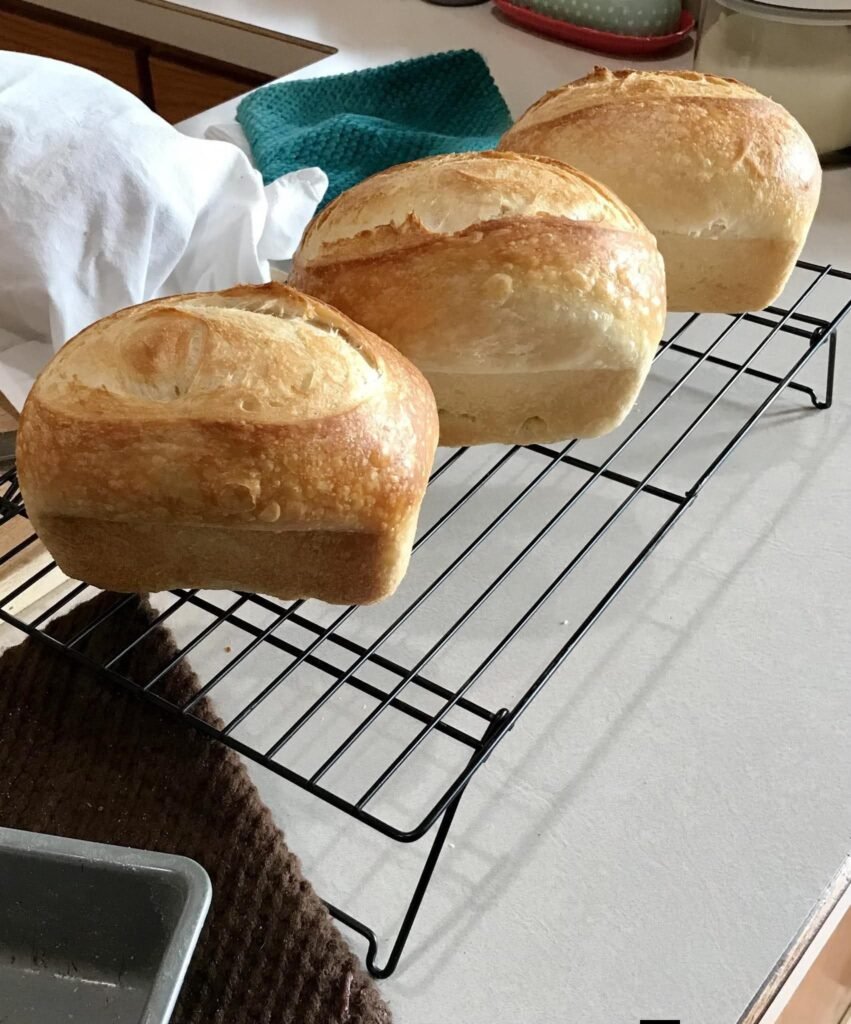

This soft and fluffy gluten-free bread is light, tender, and easy to make at home. It has a soft crumb, a lightly golden crust, and slices beautifully without falling apart. It’s perfect for sandwiches, toast, or simply enjoying warm with butter.
Ingredients
For the Bread
- 3 cups gluten-free all-purpose flour blend
- 2 ¼ teaspoons instant or active dry yeast
- 2 tablespoons granulated sugar or honey
- 1 teaspoon salt
- 1 teaspoon xanthan gum, if your flour blend does not already contain it
- 1 ¼ cups warm milk
- 2 large eggs, room temperature
- 3 tablespoons olive oil or melted butter
- 1 tablespoon apple cider vinegar
- 1 teaspoon baking powder
For the Top
- 1 tablespoon melted butter
- Sesame seeds or gluten-free oats, optional
Instructions
1. Prepare the Yeast
First, warm the milk until it feels warm but not hot. If using active dry yeast, combine the warm milk, sugar, and yeast in a small bowl.
Let it sit for about 5–10 minutes, until slightly foamy.
If using instant yeast, you can add it directly with the dry ingredients.
2. Mix the Dry Ingredients
Meanwhile, add the gluten-free flour, salt, xanthan gum, and baking powder to a large mixing bowl.
Whisk everything together so the ingredients are evenly distributed.
3. Add the Wet Ingredients
Add the eggs, olive oil or melted butter, apple cider vinegar, and the yeast mixture to the dry ingredients.
Using a sturdy spoon or electric mixer, beat the mixture for about 3–4 minutes.
The dough will be much softer and stickier than traditional wheat bread dough. Do not add extra flour.
4. Transfer to the Pan
Grease a 9 × 5-inch loaf pan and line it with parchment paper if desired.
Transfer the dough into the pan.
Using a wet spatula, gently smooth the top. You can also brush the surface lightly with oil or melted butter.
5. Let It Rise
Cover the pan loosely with plastic wrap or a clean kitchen towel.
Place it somewhere warm and let the dough rise for approximately 45–60 minutes, or until it has risen noticeably and is close to the top of the pan.
Avoid letting it rise too much, because over-proofing can cause gluten-free bread to collapse during baking.
6. Bake
Preheat your oven to 375°F (190°C).
Bake the bread for 35–45 minutes, or until the top is golden brown and the internal temperature reaches approximately 200–205°F (93–96°C).
If the top starts browning too quickly, loosely cover it with aluminum foil during the last 10–15 minutes.
7. Cool Completely
Remove the bread from the pan and place it on a wire rack.
Brush the top with melted butter while it is still warm if you want a softer crust.
Allow the bread to cool completely before slicing. This helps the inside finish setting and prevents a gummy texture.
Tips for Soft Gluten-Free Bread
- Use a good-quality gluten-free flour blend designed for bread or baking.
- Check whether your flour already contains xanthan gum before adding more.
- Keep the milk warm, not hot, so you don’t damage the yeast.
- Don’t try to make the dough as firm as traditional wheat bread dough.
- For the softest texture, don’t skip the eggs, oil, or vinegar.
- Let the bread cool completely before slicing.
- For extra-soft slices, store the cooled bread in an airtight container or sealed bag.
Storage
Store the cooled bread at room temperature in an airtight bag or container for up to 3 days.
For longer storage, slice the bread and freeze it in a freezer-safe bag for up to 2–3 months. Individual slices can be thawed at room temperature or toasted straight from frozen.
Serving Ideas
This gluten-free bread is delicious with:
- Butter and jam
- Peanut butter and banana
- Eggs and avocado
- Turkey and cheese
- Chicken salad
- Grilled cheese
- Toast with honey
- Your favorite sandwich fillings
Nutrition Facts
Approximate nutrition per slice, based on 12 slices:
- Calories: 175
- Carbohydrates: 27g
- Protein: 4g
- Fat: 6g
- Saturated Fat: 1.5g
- Fiber: 2g
- Sugar: 3g
- Sodium: 250mg
Nutrition will vary depending on the gluten-free flour blend and other ingredients used.
Final Thoughts
Making soft gluten-free bread at home doesn’t have to be difficult. The key is using the right flour blend, keeping the dough moist, and giving it enough time to rise. Once baked and completely cooled, you’ll have a tender, fluffy loaf that’s perfect for everyday sandwiches and toast.


