
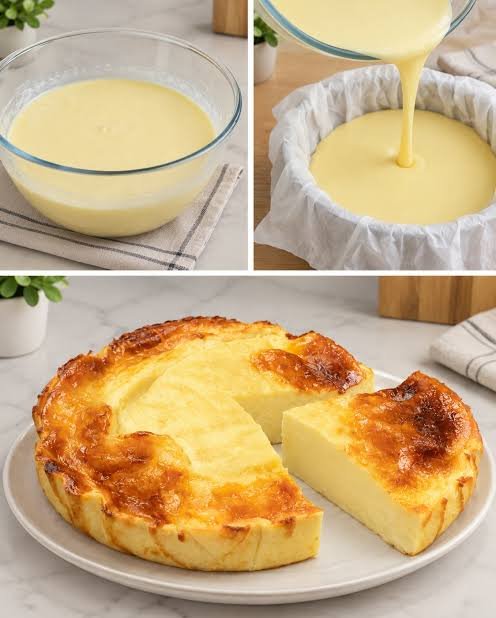

This sourdough crustless baked yogurt cheesecake is creamy, lightly tangy, and naturally delicious without a traditional cookie crust. Greek yogurt gives it a smooth texture, while sourdough starter adds a gentle tang that pairs beautifully with the sweetness of vanilla and sugar.
It is easy to prepare with simple ingredients, and you don’t need a water bath or a separate crust.
Recipe Details
- Prep Time: 10 minutes
- Cook Time: 45–55 minutes
- Cooling Time: 2 hours
- Chilling Time: 4 hours
- Total Time: About 7 hours
- Servings: 8
- Course: Dessert
- Cuisine: American-inspired
Ingredients
- 2 cups (450 g) plain Greek yogurt, preferably full-fat
- 3 large eggs, at room temperature
- ½ cup (100 g) granulated sugar
- ½ cup (120 g) sourdough starter or sourdough discard
- 2 tablespoons (16 g) cornstarch
- 1 teaspoon vanilla extract
- 1 tablespoon fresh lemon juice
- 1 teaspoon finely grated lemon zest, optional
- ¼ teaspoon salt
Optional topping:
- Fresh strawberries or blueberries
- Powdered sugar for dusting
- A little honey for drizzling
Instructions
Step 1: Prepare the Pan
Preheat your oven to 325°F (160°C). Lightly grease an 8-inch round cake pan or springform pan. Line the bottom with parchment paper to make removing the cheesecake easier.
If using a springform pan, place it on a baking sheet to catch any possible drips.
Step 2: Mix the Yogurt and Sugar
Add the Greek yogurt and granulated sugar to a large mixing bowl. Whisk until the mixture looks smooth and the sugar begins to dissolve.
Full-fat Greek yogurt gives the cheesecake a richer, creamier texture. If your yogurt contains excess liquid, drain it before measuring.
Step 3: Add the Eggs
Add the eggs one at a time, whisking gently after each addition. Avoid beating too much air into the mixture because excessive air can cause the cheesecake to puff up and then sink as it cools.
Stir in the vanilla extract, lemon juice, lemon zest, and salt.
Step 4: Add the Sourdough Starter
Stir the sourdough starter or discard into the yogurt mixture until evenly combined.
Use a starter that smells pleasantly tangy and shows no signs of mold or unusual discoloration. An unfed starter or discard works well for this recipe.
Step 5: Add the Cornstarch
Sift the cornstarch into the bowl and whisk until no lumps remain. The batter should be smooth and pourable, similar to a thick custard.
For the smoothest result, you can pass the batter through a fine-mesh sieve before baking.
Step 6: Fill the Pan
Pour the cheesecake batter into the prepared pan. Gently tap the pan against the counter a couple of times to release large air bubbles.
Smooth the top with a spatula if needed.
Step 7: Bake the Cheesecake
Place the pan on the middle rack of the preheated oven. Bake for 45–55 minutes, checking toward the end of the baking time.
The edges should look set, and the center should have a slight wobble when you gently move the pan. The top may turn lightly golden.
If the center still looks liquid, continue baking for another 5–10 minutes. Avoid baking until the entire cheesecake is completely firm, as this can make it dry.
Step 8: Cool Slowly
Turn off the oven and leave the cheesecake inside with the door slightly open for about 10 minutes.
Remove the pan and let the cheesecake cool at room temperature for approximately 2 hours. It may sink slightly in the middle as it cools; this is normal for a crustless yogurt cheesecake.
Step 9: Chill Before Serving
Once the cheesecake has cooled, cover it and refrigerate for at least 4 hours, preferably overnight.
Carefully remove it from the pan, slice with a clean knife, and serve chilled with fresh berries, powdered sugar, or a drizzle of honey.
Tips for the Best Cheesecake
- Use thick yogurt: Greek yogurt produces a firmer cheesecake than regular yogurt.
- Measure the starter accurately: Too much starter can make the cheesecake overly tangy and affect its texture.
- Don’t overmix: Gentle mixing helps prevent a foamy batter and excessive cracking.
- Watch the center: A slight wobble is better than an overbaked, dry cheesecake.
- Chill completely: The cheesecake firms up as it cools, making it easier to slice.
- Want a sweeter dessert? Increase the sugar to ⅔ cup (about 135 g).
Variations
Lemon Sourdough Cheesecake: Add an extra teaspoon of lemon zest for a brighter citrus flavor.
Berry Cheesecake: Fold ½ cup of fresh blueberries into the batter before baking, or serve with a berry sauce.
Honey Yogurt Cheesecake: Replace part of the sugar with honey. The texture and sweetness may vary slightly.
Gluten-Free Version: Use certified gluten-free cornstarch and a sourdough starter made with gluten-free flour. Regular wheat-based sourdough starter is not suitable for a gluten-free recipe.
Storage Instructions
- Refrigerator: Store covered in an airtight container for up to 4 days.
- Freezer: Freeze individual slices, well wrapped, for up to 2 months for best quality.
- Thawing: Defrost frozen slices overnight in the refrigerator.
Because this cheesecake contains eggs and dairy, refrigerate it within 2 hours of baking or serving. Do not leave it sitting at room temperature for extended periods.
Frequently Asked Questions
Can I use regular yogurt instead of Greek yogurt?
Yes, but regular yogurt is thinner and contains more liquid. Drain it through a fine-mesh strainer lined with cheesecloth until it becomes thick before using.
Can I use sourdough discard straight from the refrigerator?
Yes. Cold discard can be used, although bringing it closer to room temperature makes it easier to mix evenly into the batter.
Does this cheesecake taste sour?
It has a mild tang from the yogurt and sourdough starter. The sugar and vanilla balance the flavor, so the result should taste creamy and lightly sweet rather than sharply sour.
Why did my cheesecake crack?
Cracks can happen when the cheesecake is overbaked, mixed too vigorously, or cooled too quickly. Even if it cracks, it will still taste delicious.
Can I make it without cornstarch?
Cornstarch helps the cheesecake set and slice cleanly. Leaving it out may result in a softer, less stable texture.
Is this a traditional sourdough cheesecake?
No. This is a yogurt-based baked cheesecake that uses sourdough starter for flavor. The starter is not relied on to leaven the cheesecake, and baking does not make a wheat-based starter gluten-free.
Nutrition Facts
Estimated per serving, based on 8 servings and full-fat Greek yogurt.
| Nutrient | Amount |
|---|---|
| Calories | 145 kcal |
| Protein | 8 g |
| Carbohydrates | 17 g |
| Fat | 5 g |
| Saturated Fat | 2 g |
| Sugar | 14 g |
| Fiber | 0 g |
| Sodium | 100 mg |
Actual nutrition will vary depending on the yogurt, sourdough starter, and ingredients used.
Final Thoughts
This sourdough crustless baked yogurt cheesecake is a simple dessert with a creamy center, lightly golden top, and gentle tang. With no crust to prepare and no complicated baking techniques, it’s a lovely option for an everyday treat or a dessert to share with family and friends. Serve it cold with fresh berries for a fresh, delicious finish.