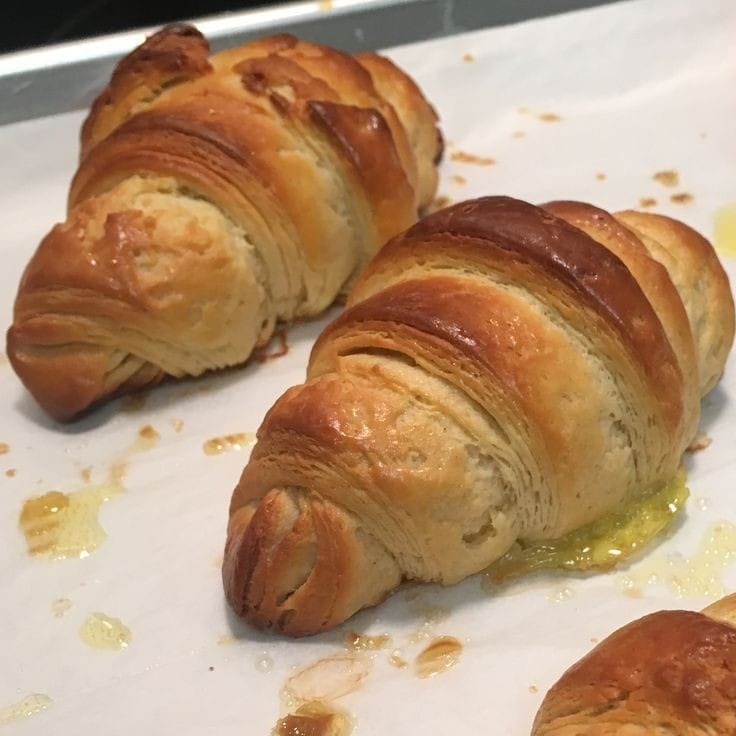

These gluten-free croissants are buttery, flaky, golden, and surprisingly light. The dough is made with a gluten-free flour blend and a little psyllium husk to give it enough structure to roll, fold, and bake beautifully. They’re perfect for breakfast, brunch, or serving with butter, jam, honey, or chocolate.
Time
- Prep: 35 minutes
- Chilling: 8–12 hours
- Proofing: 2–3 hours
- Bake: 20–25 minutes
- Total: About 11–15 hours
Yield
8 croissants
Ingredients
For the Dough
- 2 ½ cups (300 g) gluten-free all-purpose flour blend, preferably with xanthan gum
- 2 tablespoons (18 g) psyllium husk powder
- 2 tablespoons (25 g) granulated sugar
- 1 teaspoon salt
- 2 ¼ teaspoons (7 g) instant yeast
- ¾ cup (180 ml) warm milk
- 1 large egg
- 2 tablespoons (28 g) unsalted butter, melted and cooled
- 1 teaspoon vanilla extract, optional
For the Butter Layer
- ½ cup (113 g) cold unsalted butter
- 1 tablespoon gluten-free flour
For the Egg Wash
- 1 egg
- 1 tablespoon milk
Instructions
1. Make the Dough
First, whisk together the gluten-free flour, psyllium husk powder, sugar, salt, and instant yeast in a large bowl.
Next, add the warm milk, egg, melted butter, and vanilla. Stir with a wooden spoon or spatula until a soft, slightly sticky dough forms.
Because gluten-free dough behaves differently from regular wheat dough, don’t add a lot of extra flour. The dough should be soft but manageable.
Cover the bowl and let the dough rest at room temperature for about 20 minutes. This gives the psyllium time to absorb moisture and helps the dough become easier to handle.
2. Prepare the Butter Block
Meanwhile, place the cold butter between two sheets of parchment paper.
Using a rolling pin, gently pound and roll the butter into a rectangle approximately 6 × 4 inches (15 × 10 cm).
Sprinkle the tablespoon of gluten-free flour over the butter and lightly press it in.
Place the butter in the refrigerator while you prepare the dough.
3. Chill the Dough
Place the dough between two sheets of parchment paper.
Roll it into a rectangle approximately 10 × 7 inches (25 × 18 cm).
Transfer it to the refrigerator and chill for about 30–45 minutes.
The dough and butter should be cold and firm but still flexible before you begin laminating.
4. Add the Butter
Place the chilled butter rectangle in the center of the dough.
Fold the dough over the butter from both sides, completely enclosing the butter.
Pinch the seams gently to prevent the butter from escaping.
5. First Fold
Place the dough on a lightly floured sheet of parchment.
Gently roll it into a long rectangle, approximately 18 × 7 inches (45 × 18 cm).
Work slowly and avoid pressing too hard. If the butter starts becoming soft, refrigerate the dough for 15–20 minutes.
Fold the dough into thirds like a letter:
- Fold the bottom third toward the center.
- Fold the top third over it.
This is your first fold.
Wrap the dough and refrigerate for 30–45 minutes.
6. Second Fold
Remove the dough from the refrigerator and turn it 90 degrees.
Again, gently roll it into a long rectangle.
Fold it into thirds exactly as before.
Wrap and refrigerate for another 30–45 minutes.
7. Roll and Cut
After the second fold, roll the dough into a rectangle approximately ¼ inch (6 mm) thick.
Using a sharp knife or pizza cutter, cut the dough into 8 long triangles.
Make a small slit in the center of the wide end of each triangle.
Starting at the wide end, gently roll each triangle toward the point.
Don’t roll them too tightly because they need room to expand while proofing.
Curve the ends slightly toward each other to create the classic croissant shape.
8. Proof
Place the croissants on a parchment-lined baking sheet, leaving plenty of space between them.
Cover loosely with plastic wrap or a clean kitchen towel.
Let them proof in a warm, draft-free place for approximately 2–3 hours.
They should look noticeably puffier and feel light and delicate.
Important: Don’t proof them somewhere extremely hot. If the butter melts out of the dough, the croissants won’t develop good layers.
9. Egg Wash
Whisk together the egg and milk.
Once the croissants are properly proofed, gently brush the tops with the egg wash.
Try not to let the egg wash drip heavily onto the sides, as this can interfere with the layers.
10. Bake
Preheat your oven to 400°F (200°C).
Bake the croissants for 8 minutes.
Then reduce the temperature to 375°F (190°C) and continue baking for another 12–17 minutes, or until deeply golden and cooked through.
Remove from the oven and let them cool for at least 15 minutes before serving.
Tips for Flaky Gluten-Free Croissants
- Keep everything cold. The butter should remain firm throughout the folding process.
- Don’t add too much flour when rolling. Excess flour can make the croissants dry.
- Psyllium husk is important because it helps provide elasticity and structure in gluten-free dough.
- If your gluten-free flour blend doesn’t contain xanthan gum, add about ½ teaspoon xanthan gum.
- If the dough cracks while rolling, allow it to sit at room temperature for 5–10 minutes before continuing.
- If the butter starts leaking, stop immediately and chill the dough.
- Proofing can take longer depending on the temperature of your kitchen.
- Allow the croissants to cool slightly before cutting so the interior can finish setting.
Easy Variations
Chocolate Croissants: Place a small piece of gluten-free dark chocolate at the wide end of each triangle before rolling.
Almond Croissants: After baking, brush with a little simple syrup and spread with gluten-free almond cream.
Cheese Croissants: Add a thin slice of your favorite cheese before rolling.
Sweet Croissants: Serve warm with strawberry jam, raspberry preserves, honey, or powdered sugar.
Storage
Store cooled croissants in an airtight container at room temperature for 1–2 days.
For longer storage, freeze them in a freezer-safe bag for up to 2 months. Reheat directly from frozen in a 350°F (175°C) oven for about 8–12 minutes.
Nutrition Facts
Approximate per croissant, based on 8 servings:
- Calories: 285 kcal
- Carbohydrates: 34 g
- Protein: 5 g
- Fat: 15 g
- Saturated Fat: 9 g
- Fiber: 3 g
- Sugar: 5 g
- Sodium: 330 mg
Nutrition will vary depending on the gluten-free flour blend and butter used.
Frequently Asked Questions
Why are my gluten-free croissants not flaky?
The most common causes are butter that became too warm, insufficient chilling between folds, or over-proofing. Keeping the dough cold is especially important.
Can I make the dough the night before?
Yes. In fact, an overnight chill can make the process easier. After preparing the dough, cover it well and refrigerate it overnight. Continue with the butter lamination the next day.
Can I use gluten-free 1-to-1 flour?
Yes, provided it is designed for yeast baking and contains xanthan gum. Different blends absorb liquid differently, so you may need a small adjustment to the milk.
Can I freeze unbaked croissants?
Yes. Shape the croissants, freeze them on a tray, then transfer them to a freezer bag. Thaw and proof before baking.
Are these croissants completely gluten-free?
They can be, provided every ingredient—including the flour, yeast, butter, and other additions—is certified gluten-free and prepared on surfaces free from cross-contact.