
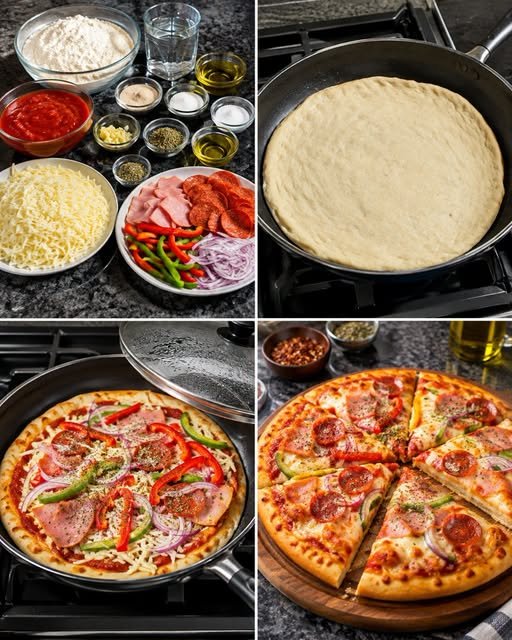

Crispy around the edges, soft in the center, and loaded with melty mozzarella, ham, pepperoni, and colorful vegetables, this homemade gluten-free sourdough pizza is a delicious way to enjoy pizza without regular wheat flour. The sourdough starter adds a mild tang and gives the crust a wonderful texture.
Recipe Information
Prep Time: 20 minutes
Fermentation Time: 4–8 hours
Pre-Bake Time: 7–9 minutes
Final Bake Time: 8–12 minutes
Total Time: About 5–9 hours, depending on fermentation
Servings: 2–4
Cuisine: Italian-inspired
Diet: Gluten-Free
Ingredients
For the Gluten-Free Sourdough Dough
- 1 cup (240 g) active gluten-free sourdough starter, bubbly and recently fed
- 1 ½ cups (210 g) gluten-free all-purpose flour blend
- ½ cup (120 ml) lukewarm water, plus 1–2 tablespoons if needed
- 1 tablespoon olive oil
- 1 teaspoon honey or sugar
- ¾ teaspoon salt
- 1 teaspoon psyllium husk powder
- ½ teaspoon baking powder, optional
Important: If you need the pizza to be strictly gluten-free, make sure your flour, sourdough starter, psyllium husk, baking powder, and all toppings are certified gluten-free.
For the Pizza Sauce
- ½ cup tomato puree or crushed tomatoes
- 1 tablespoon olive oil
- 1 garlic clove, finely chopped
- ½ teaspoon dried oregano
- ½ teaspoon dried basil
- ¼ teaspoon salt, or to taste
- ¼ teaspoon black pepper
- ¼ teaspoon sugar, optional
For the Toppings
- 200 g grated mozzarella cheese
- 100 g ham, sliced or chopped
- 50 g pepperoni, sliced
- ½ bell pepper, thinly sliced
- ¼ onion, thinly sliced
- 1–2 tablespoons grated Parmesan, optional
- Dried oregano, to taste
- A drizzle of olive oil, optional
Instructions
1. Prepare the Dough
First, add the gluten-free sourdough starter, lukewarm water, olive oil, and honey or sugar to a large mixing bowl. Stir until well combined.
Next, add the gluten-free flour blend, psyllium husk powder, salt, and baking powder if using.
Mix everything thoroughly with a wooden spoon or spatula. The dough will be softer and stickier than traditional wheat pizza dough. Don’t worry—it should not look like regular kneadable dough.
Let the dough rest for about 10 minutes. During this time, the psyllium husk will absorb some of the liquid and help the dough become easier to handle.
If the dough seems extremely dry, add water 1 tablespoon at a time. On the other hand, if it is very loose, add another tablespoon of gluten-free flour.
2. Ferment the Dough
Cover the bowl with plastic wrap or a clean kitchen towel.
Leave the dough at room temperature for approximately 4–8 hours, depending on the strength of your starter and the temperature of your kitchen.
The dough doesn’t necessarily need to double in size. Look for a slightly puffed appearance and some bubbles.
For a stronger sourdough flavor, you can refrigerate the dough after fermentation for several hours or overnight.
3. Make the Pizza Sauce
Meanwhile, prepare the sauce.
Add the tomato puree, olive oil, chopped garlic, oregano, basil, salt, pepper, and optional sugar to a small bowl.
Mix well and set aside.
If you prefer a thicker sauce, simmer it over low heat for 5–8 minutes, then allow it to cool before using.
4. Prepare the Pizza Base
Preheat your oven to 475°F (245°C). If you have a pizza stone or pizza steel, place it in the oven while it preheats.
Place a sheet of parchment paper on your work surface.
Lightly oil the parchment paper. Transfer the dough onto it.
Because gluten-free dough doesn’t stretch like regular pizza dough, gently press it outward with lightly oiled fingers.
Shape it into a round pizza approximately 10–12 inches (25–30 cm) wide.
Try to keep the edges slightly thicker than the center.
5. Pre-Bake the Crust
For a sturdier gluten-free crust, bake the plain dough first.
Transfer the parchment and dough onto a hot baking tray or pizza stone.
Bake for approximately 7–9 minutes.
The crust should look set but shouldn’t be deeply browned yet.
Remove it from the oven.
6. Add the Sauce and Toppings
Spread the pizza sauce evenly over the crust, leaving a small border around the edges.
Then sprinkle over the grated mozzarella.
Add the chopped ham and sliced pepperoni.
Next, arrange the bell pepper and sliced onion over the cheese.
Finally, sprinkle with dried oregano and Parmesan if using.
7. Bake the Pizza
Return the pizza to the oven.
Bake for another 8–12 minutes, or until:
- The cheese is melted and bubbling
- The toppings are cooked
- The edges are golden brown
- The bottom of the crust is firm and lightly crisp
For extra browning, place the pizza under the broiler for 1–2 minutes, watching it closely.
8. Rest and Serve
Allow the pizza to cool for about 3–5 minutes before slicing.
Finish with a light drizzle of olive oil and another sprinkle of oregano if desired.
Slice and serve warm.
Recipe Notes
Make It Dairy-Free
Use your favorite dairy-free mozzarella-style cheese and check that all other ingredients are dairy-free.
Make It Vegetarian
Simply leave out the ham and pepperoni and add mushrooms, olives, tomatoes, spinach, or extra bell peppers.
For a Crispier Crust
Bake the pizza on a preheated pizza stone or steel. You can also brush the edges lightly with olive oil before baking.
For a Softer Crust
Don’t overbake the pizza. Remove it as soon as the cheese is melted and the edges are lightly golden.
Gluten-Free Sourdough Starter
Use an active starter made from a gluten-free flour such as brown rice flour, sorghum flour, or a gluten-free starter blend. The starter should be bubbly and active before making the dough.
Storage
Store leftover pizza in an airtight container in the refrigerator for up to 3 days.
To reheat, place slices in a skillet over medium-low heat and cover for a few minutes. Alternatively, reheat them in an air fryer at 350°F (175°C) for 3–5 minutes.
You can also freeze cooled pizza slices for up to 2 months. Wrap each slice individually and place them in a freezer-safe bag.
Approximate Nutrition
Per serving, based on 4 servings:
- Calories: 430 kcal
- Protein: 22 g
- Carbohydrates: 43 g
- Fat: 20 g
- Fiber: 4 g
- Sugar: 4 g
- Sodium: 900 mg
Nutrition will vary depending on the gluten-free flour blend, cheese, ham, pepperoni, and other toppings used.
Frequently Asked Questions
Can I make this pizza without psyllium husk?
Psyllium husk is highly recommended because it helps gluten-free dough hold together and gives the crust a more flexible texture. If your gluten-free flour blend already contains psyllium or xanthan gum, check the package before adding extra.
Why is my gluten-free sourdough dough sticky?
Gluten-free dough naturally has a different texture from wheat dough. It should be soft and somewhat sticky. Allowing it to rest after mixing helps the flour and psyllium absorb the water.
Can I prepare the dough the night before?
Yes. After the initial fermentation, you can refrigerate the dough and use it the next day. Let it sit at room temperature for a little while before shaping if it becomes very firm.
Can I skip the pre-baking step?
Yes, but pre-baking helps gluten-free pizza develop a firmer, crispier crust. If you prefer a softer crust, you can add the toppings immediately and bake the pizza in one step.
Can I use regular sourdough starter?
No, not if you need the pizza to be gluten-free. Use a starter made entirely with gluten-free ingredients and avoid cross-contamination with regular wheat flour.


